If your dentures move when you eat, speak, or laugh, you are not alone. For many patients, loose dentures in Syosset, NY become more noticeable over time as the mouth changes shape.
However, loose dentures are not something you have to simply live with. Understanding why dentures loosen can help you explore better, more stable options.
Why Do Dentures Get Loose Over Time?
Dentures are designed to fit the gums and jaw as they exist at the time they are made. Over time, those tissues can change, especially after tooth loss.
When teeth are missing, the jawbone no longer receives the same stimulation from chewing. As a result, the bone can gradually shrink or reshape, causing dentures that once fit well to feel loose.
Common Signs Your Dentures No Longer Fit Properly
In many cases, denture fit problems develop gradually. Common signs include:
- Dentures slipping while eating
- Difficulty speaking clearly
- Sore spots on the gums
- Needing more adhesive than before
- Loose lower dentures that move throughout the day
If these issues continue, it may be time to have your dentures evaluated.
Why Lower Dentures Often Feel Less Stable
Lower dentures are especially prone to movement because they have less surface area for suction and must work around the tongue and jaw muscles.
Because of this, many patients find that lower dentures become frustrating even when the upper denture still feels relatively secure.
Do Denture Relines Help?
A denture reline can improve fit by reshaping the inside surface of the denture so it better matches the gums. For some patients, this can provide meaningful short-term improvement.
Still, relines do not stop jawbone changes from continuing. If dentures repeatedly become loose, a more stable option may be worth considering.
Implant Dentures: A More Stable Alternative to Loose Dentures
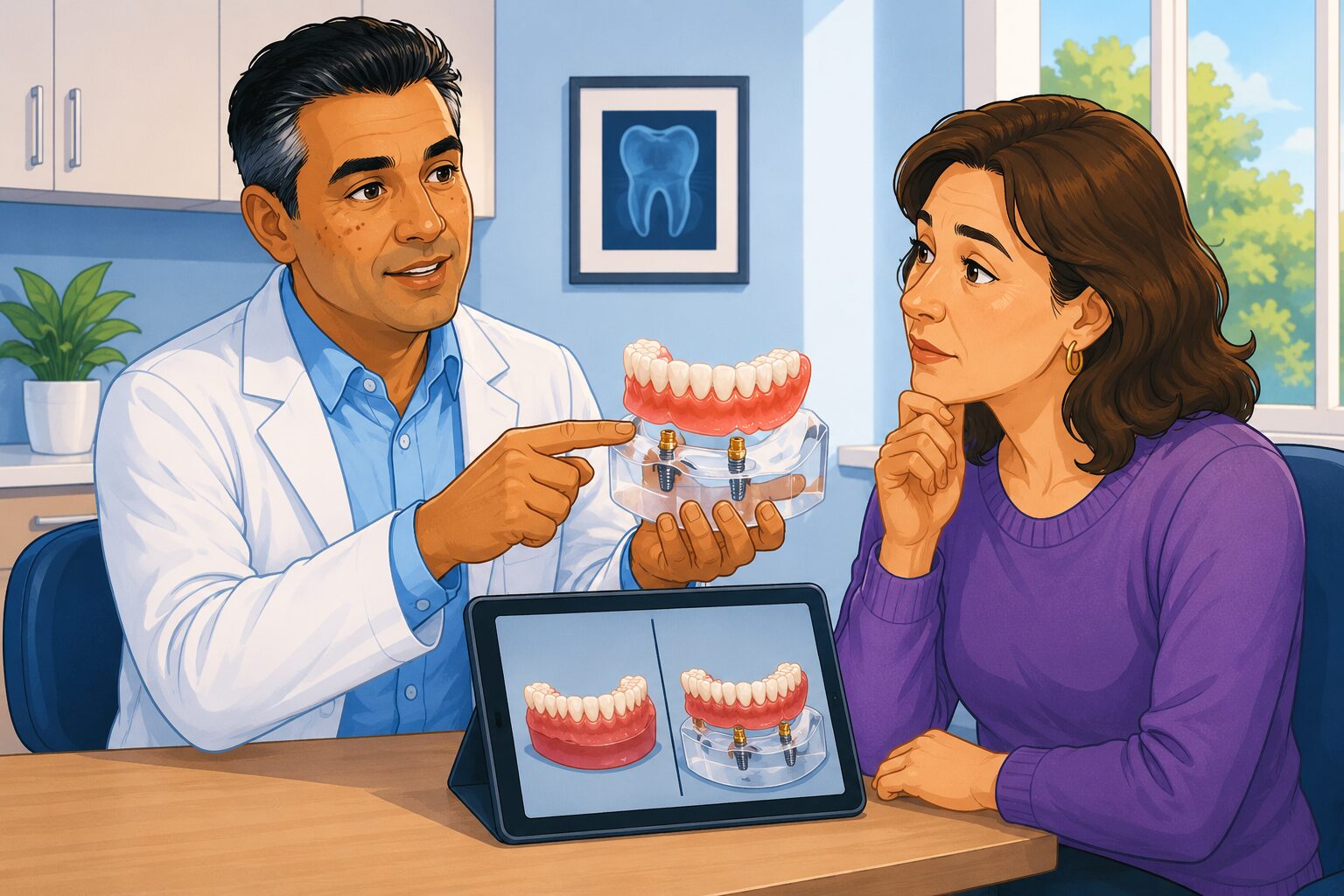
Implant dentures use dental implants to help support or secure a denture. Depending on the design, they may snap onto implants or be fixed in place by the dentist.
For patients frustrated by unstable dentures, implant dentures in Syosset, NY may offer improved comfort, chewing ability, and confidence.
Snap-in dentures
Snap-in dentures attach to dental implants and can be removed for cleaning. They often provide more stability than traditional dentures.
Fixed implant dentures
Fixed implant dentures, sometimes called permanent dentures, are attached to implants and can only be removed by a dental professional.
Full-arch implant options
For patients missing all teeth in an arch, full-arch implant solutions may provide a more secure alternative to removable dentures.
When Should You Consider Implant Dentures?
You may want to explore implant denture options if your dentures regularly slip, cause sore spots, affect your eating, or make you feel less confident in social situations.
A consultation can help determine whether implants are appropriate based on your oral health, bone support, and goals.
Schedule a Denture Consultation in Syosset
If your dentures feel loose or uncomfortable, an evaluation can help identify the cause and explain your options. Addressing denture fit problems early may help improve comfort and protect your long-term oral health.
Schedule a Denture Consultation
Tired of loose or uncomfortable dentures? Contact Shine Dental Associates
to learn whether implant dentures or another solution may be right for you.
Shine Dental Associates
400 Jericho Turnpike, Syosset, NY 11791
Phone: 516-348-8500
Frequently Asked Questions
Why do dentures get loose over time?
Dentures can become loose as the gums and jawbone change shape after tooth loss. This can affect how well the denture fits.
Can loose dentures be fixed?
In some cases, a denture adjustment or reline may improve the fit. If looseness keeps returning, implant dentures may be a more stable option.
Are implant dentures better than regular dentures?
Implant dentures can provide more stability than traditional dentures, but the right option depends on your oral health, bone support, and treatment goals.
Related Services:
For additional patient education about denture types, visit
Cleveland Clinic’s denture resource
.
516-348-8500