
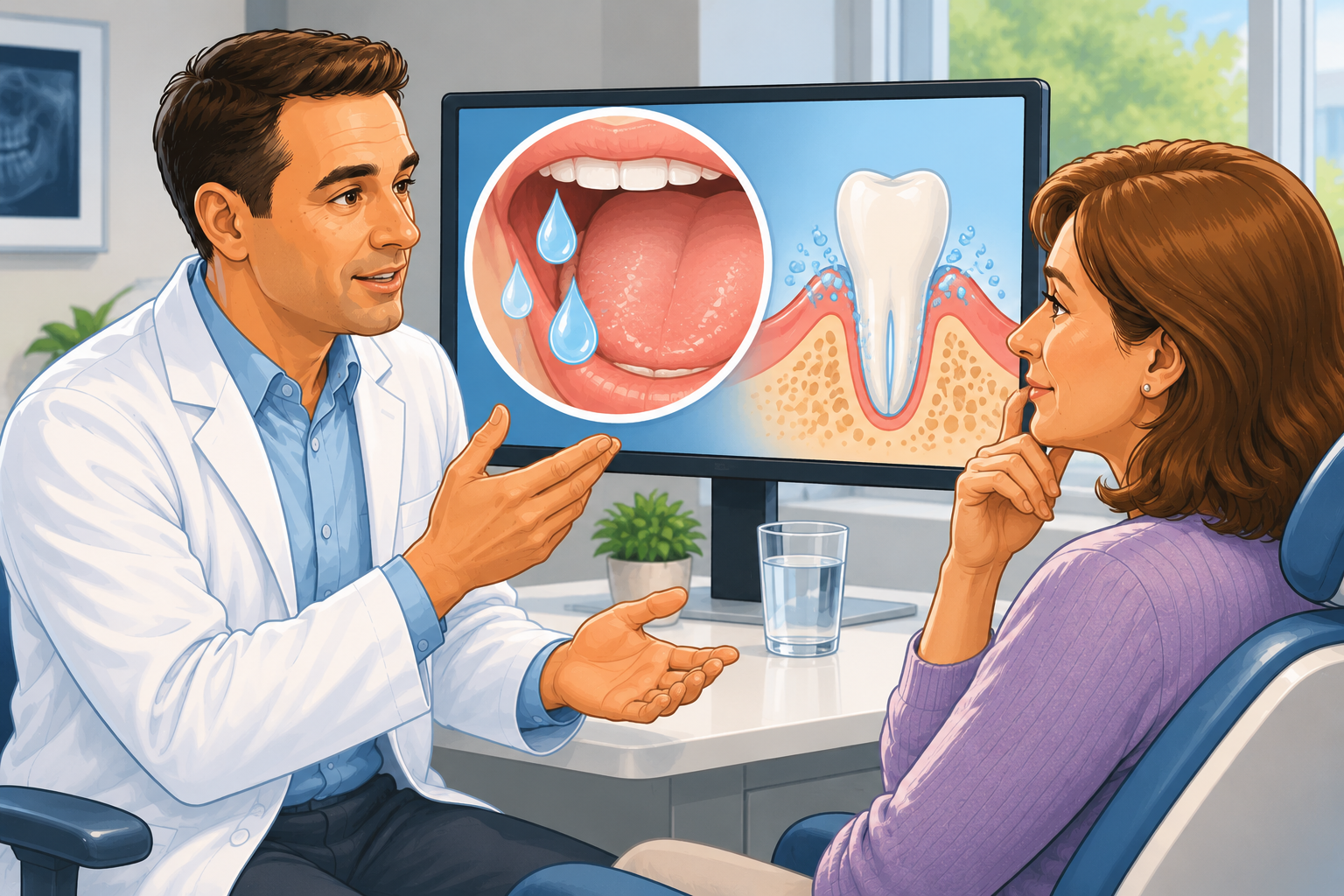
Do you frequently wake up with a dry mouth, feel thirsty even after drinking water, or have difficulty swallowing dry foods? Understanding common dry mouth causes can help you recognize when the problem may need attention.
Dry mouth, also called xerostomia, occurs when your mouth does not produce enough saliva to stay comfortably moist. Although occasional dryness is common, persistent symptoms can affect your teeth, gums, and everyday comfort.
At Shine Dental Associates in Syosset, NY, we encourage patients to discuss ongoing dry mouth symptoms during their dental examinations. Identifying possible causes early can help protect long-term oral health.
What Causes Dry Mouth?
There are several possible causes of dry mouth, ranging from temporary dehydration to medication side effects and underlying health conditions.
1. Medications
Many prescription and over-the-counter medications can reduce saliva production. These may include certain antihistamines, antidepressants, blood pressure medications, and decongestants.
If you suspect a medication is causing dry mouth, speak with your prescribing healthcare professional. Never stop or change medication without medical guidance.
2. Dehydration
Not drinking enough fluids can contribute to temporary mouth dryness. Exercise, illness, alcohol consumption, and inadequate fluid intake may make symptoms more noticeable.
3. Mouth Breathing and Nasal Congestion
Breathing through your mouth, particularly while sleeping, can leave your mouth feeling dry in the morning. Nasal congestion and certain sleep-related breathing problems may contribute.
4. Medical Conditions
Persistent dry mouth can sometimes be associated with conditions such as diabetes or Sjögren’s disease. A medical evaluation may be appropriate when dryness continues without an obvious explanation.
5. Changes in Saliva Production
Salivary gland problems, certain medical treatments, and other health factors may affect the amount or quality of saliva produced.
Why Is My Mouth So Dry at Night?
Dry mouth at night is a common concern. Saliva production naturally decreases during sleep, which can make existing dryness more noticeable.
Sleeping with your mouth open, nasal congestion, and certain medications may contribute to waking up with a dry or sticky mouth.
If nighttime dryness is accompanied by loud snoring, gasping during sleep, or significant daytime sleepiness, discuss these symptoms with a healthcare professional. They may warrant evaluation for a sleep-related breathing disorder.
Can Dry Mouth Damage Your Teeth?
Yes. Persistent dry mouth can increase the risk of dental problems. Saliva plays an important role in protecting your teeth by washing away food particles, helping neutralize acids, and supporting the mouth’s natural defenses.
When saliva production is reduced, patients may experience:
- Increased risk of tooth decay
- Persistent bad breath
- Difficulty chewing or swallowing dry foods
- Burning or irritated oral tissues
- Greater risk of certain oral infections
- Difficulty wearing removable dentures comfortably
Because dry mouth can increase cavity risk, regular dental examinations and professional cleanings become especially important.
Can Dry Mouth Affect Dentures?
Yes. Saliva helps lubricate oral tissues and contributes to the comfort and retention of some removable dentures.
Patients with reduced saliva may notice increased friction, sore spots, or difficulty keeping dentures comfortable.
If you wear dentures and experience ongoing dryness, a dental evaluation can help determine whether adjustments, moisture-management strategies, or other care may be appropriate.
How Can You Relieve Dry Mouth?
Effective dry mouth treatment depends on identifying the underlying cause. However, several practical steps may help reduce symptoms.
Stay Hydrated
Sip water regularly throughout the day. Keeping water nearby may be especially helpful if you frequently experience mouth dryness.
Try Sugar-Free Gum or Lozenges
Chewing sugar-free gum or using sugar-free lozenges may stimulate saliva production when the salivary glands are functioning adequately. Products containing xylitol may be an option for some patients.
Consider a Bedroom Humidifier
A clean, properly maintained humidifier may improve comfort when dry indoor air contributes to nighttime symptoms.
Avoid Products That Increase Dryness
Alcohol, tobacco, and alcohol-containing mouth rinses may worsen dryness for some people. Limiting these exposures may help.
Ask About Saliva Substitutes
Over-the-counter oral moisturizing gels, sprays, and saliva substitutes may provide temporary relief. Your dentist can help you select products appropriate for your needs.
Maintain Preventive Dental Care
Brush twice daily with fluoride toothpaste, clean between your teeth, and attend dental examinations at intervals recommended for your individual risk.
Some patients with persistent dry mouth may benefit from additional fluoride protection prescribed or recommended by their dentist.
When Should You See a Dentist for Dry Mouth?
Occasional mouth dryness may improve with hydration or changes in daily habits. However, ongoing symptoms should not be ignored.
Consider scheduling a dental evaluation if you experience:
- Dry mouth that persists or repeatedly returns
- Difficulty eating, swallowing, or speaking
- Frequent cavities despite regular brushing
- Burning, soreness, or white patches inside the mouth
- Persistent bad breath or denture discomfort
Your dentist can examine your oral tissues, assess your dental health, review possible contributing factors, and recommend additional medical evaluation when appropriate.
Dry Mouth Evaluations in Syosset, NY
At Shine Dental Associates, we believe preventive care begins with understanding the factors affecting each patient’s oral health.
If you’re experiencing persistent dry mouth, our dental team can evaluate its effects on your teeth and gums, discuss protective strategies, and help you determine appropriate next steps.
Whether you live in Syosset, Woodbury, Jericho, Plainview, or a nearby Long Island community, maintaining healthy saliva function is an important part of protecting your smile.
Schedule a Dental Evaluation
Concerned about persistent dry mouth or changes in your oral health? Contact Shine Dental Associates to schedule an evaluation and learn how to better protect your teeth and gums.
Shine Dental Associates
400 Jericho Turnpike, Syosset, NY 11791
Phone: 516-348-8500
Frequently Asked Questions About Dry Mouth
What is the most common cause of dry mouth?
Medication side effects are among the most common causes of persistent dry mouth. Dehydration, mouth breathing, medical conditions, and changes in salivary gland function can also contribute.
Why do I wake up with a dry mouth every morning?
Saliva production decreases during sleep. Mouth breathing, nasal congestion, medications, and dry indoor air may make morning dryness more noticeable.
Can dry mouth cause cavities?
Yes. Saliva helps neutralize acids and wash away food particles. Reduced saliva can increase the risk of cavities, particularly when dry mouth persists.
Can dry mouth be treated?
Dry mouth can often be managed, although treatment depends on the cause. Options may include hydration, saliva-stimulating products, oral moisturizers, medication review with a prescribing clinician, and preventive dental care.
When should I see a dentist about dry mouth?
Schedule an evaluation if dry mouth persists, affects eating or speaking, causes discomfort, or is accompanied by frequent cavities or changes in oral tissues.
Continue Learning About Your Oral Health
- Professional Teeth Cleaning and Dental Hygiene
- General Dentistry in Syosset, NY
- Why Dentures Get Loose Over Time
For additional information about medication-related dry mouth and oral health, read the American Dental Association’s guide to medications and oral health.
Shine Dental Associates | 400 Jericho Turnpike, Syosset, NY 11791 | 516-348-8500
Disclaimer: This article is provided for educational purposes only and is not a substitute for professional dental or medical advice. Dry mouth may have multiple causes. Consult a qualified healthcare professional for individualized evaluation and treatment recommendations.