
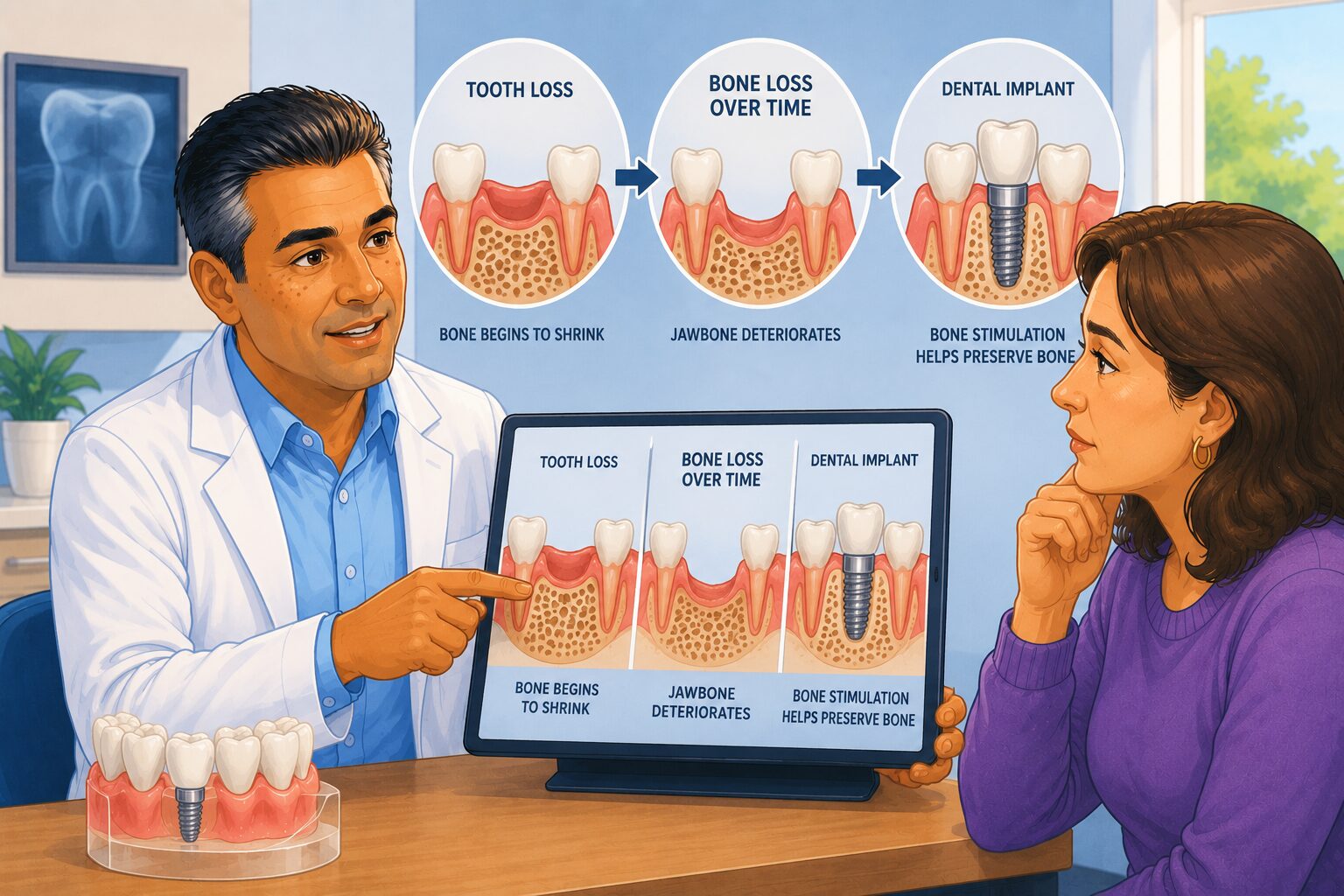
Many people are surprised to learn that a missing tooth can affect more than just their smile. When a tooth is lost and not replaced, the jawbone underneath may begin to shrink over time.
For patients with missing teeth in Syosset, NY, understanding how tooth loss affects the jawbone can help them make informed decisions about treatment and long-term oral health.
Why Does Bone Loss Happen After Tooth Loss?
Your jawbone relies on stimulation from the roots of your teeth. Every time you chew, bite, or speak, those forces are transmitted through the tooth roots into the surrounding bone.
When a tooth is removed or lost, that stimulation disappears. As a result, the body may begin to resorb, or break down, the unused bone in that area.
How Quickly Can Bone Loss Occur?
Bone loss can begin within the first few months after a tooth is lost. While the rate varies from person to person, significant changes in bone volume may occur during the first year.
Because of this, delaying tooth replacement can sometimes make future treatment more complicated.
What Problems Can Bone Loss Cause?
Jawbone loss may affect more than the area where the tooth is missing. Potential consequences include:
- Changes in facial appearance
- Shifting of neighboring teeth
- Difficulty chewing
- Changes in bite alignment
- Reduced support for future tooth replacement options
Over time, these changes may impact both function and appearance.
Do Dentures Prevent Bone Loss?
Traditional dentures can restore appearance and chewing ability, but they typically do not provide the same stimulation to the jawbone that natural tooth roots once provided.
This is one reason why some denture wearers experience changes in fit over time.
How Dental Implants Help Preserve Bone
Dental implants are placed in the jawbone and function similarly to natural tooth roots. Because implants transfer chewing forces into the bone, they may help maintain bone stimulation in the area.
For many patients, this makes implants an attractive option when replacing missing teeth.
What If Bone Loss Has Already Occurred?
Even if bone loss has already begun, treatment options may still be available. Depending on the situation, procedures such as bone grafting may help create a foundation for future implant placement.
A comprehensive evaluation can help determine which options may be appropriate.
Schedule an Implant Consultation in Syosset
If you have a missing tooth or are considering your tooth replacement options, an evaluation can help you understand the condition of your jawbone and discuss possible solutions.
Schedule an Implant Consultation
Missing a tooth? Learn how tooth loss may affect your jawbone and explore your replacement options with the team at Shine Dental Associates.
Shine Dental Associates
400 Jericho Turnpike, Syosset, NY 11791
Phone: 516-348-8500
Frequently Asked Questions
Does every missing tooth cause bone loss?
Bone loss commonly occurs after tooth loss because the jawbone no longer receives stimulation from the tooth root. The amount and rate of bone loss can vary from person to person.
How can dental implants help prevent bone loss?
Dental implants function similarly to natural tooth roots and help stimulate the jawbone during chewing. This stimulation may help preserve bone in the area where the implant is placed.
Is it too late to get a dental implant if I’ve had a missing tooth for years?
Not necessarily. Many patients remain candidates for dental implants even after long-term tooth loss. Depending on the amount of bone available, additional procedures such as bone grafting may sometimes be recommended.
Can dentures stop bone loss?
Traditional dentures can restore function and appearance, but they generally do not provide the same jawbone stimulation as natural tooth roots or dental implants.
How soon should a missing tooth be replaced?
Every situation is different, but replacing a missing tooth sooner rather than later may help preserve jawbone structure and prevent neighboring teeth from shifting. A dental evaluation can help determine the best timing for treatment.