
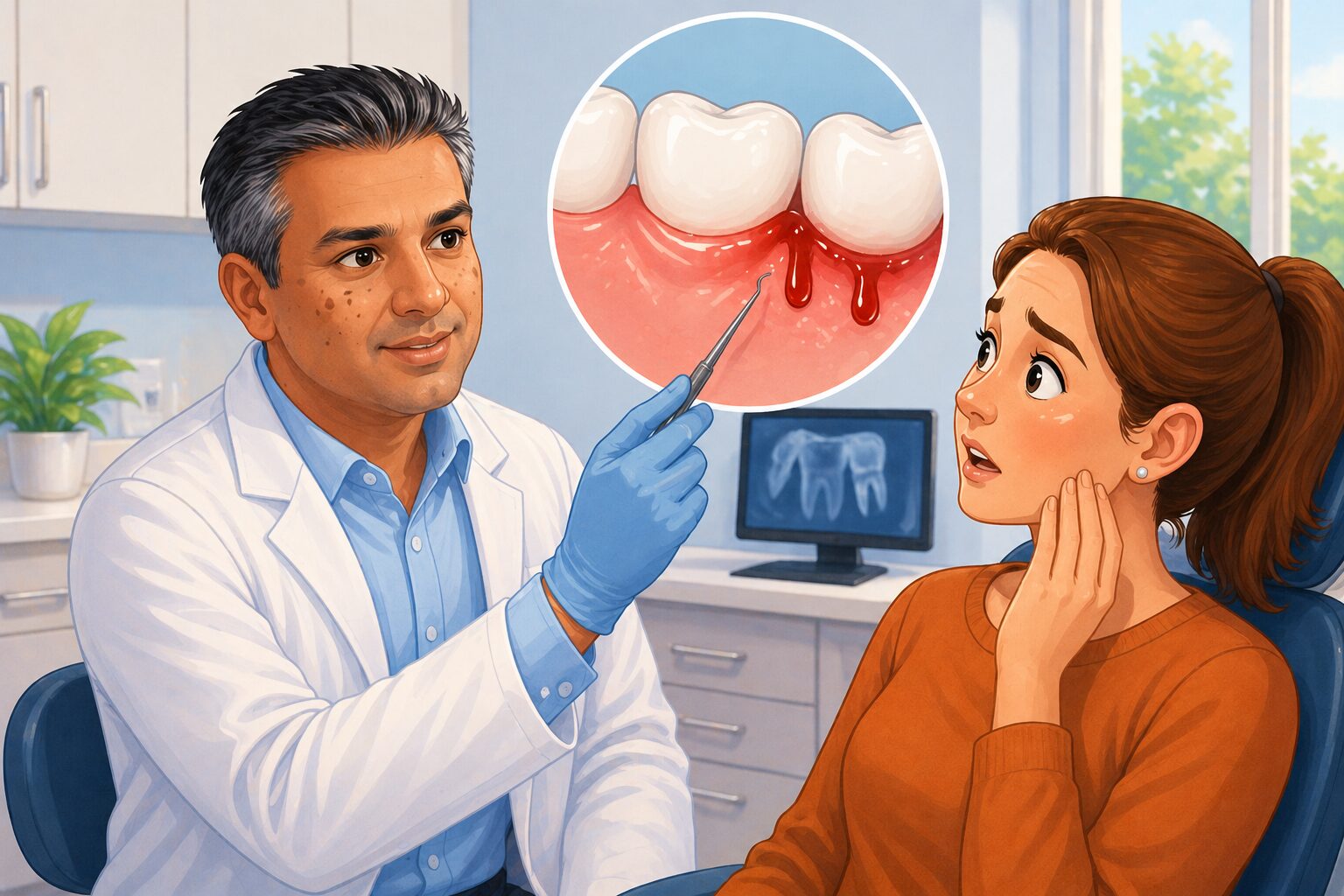
If your gums bleed when you brush or floss, it can feel alarming. For many patients, bleeding gums in Syosset, NY may be an early sign that the gum tissue is irritated, inflamed, or in need of professional attention.
However, bleeding gums do not always mean something serious is happening. The key is knowing when it is temporary and when it may be a warning sign of gum disease.
Is It Normal for Gums to Bleed?
Occasional bleeding may happen if you brush too hard, start flossing after a long break, or use a toothbrush with firm bristles. In many cases, mild bleeding improves as your gums become healthier.
Still, gums that bleed regularly should not be ignored. Frequent bleeding can be a sign of gingivitis, which is the early stage of gum disease.
Common Causes of Bleeding Gums
Plaque buildup
Plaque is a sticky film of bacteria that forms on the teeth. When plaque is not removed thoroughly, it can irritate the gums and lead to inflammation.
Gingivitis
Gingivitis can cause red, swollen, tender gums that bleed easily. The good news is that early gum inflammation may often be improved with professional care and better home hygiene.
Brushing too hard
Using too much pressure or a hard-bristled toothbrush can damage delicate gum tissue and contribute to bleeding.
Flossing after a long gap
If you have not flossed consistently, your gums may bleed at first. This often improves with gentle, regular flossing.
When Bleeding Gums May Be a Sign of Gum Disease
In some cases, bleeding gums may be connected to early gum disease symptoms. Warning signs to watch for include:
- Bleeding when brushing or flossing
- Red, swollen, or tender gums
- Persistent bad breath
- Receding gums
- Loose or shifting teeth
If these symptoms continue, a dental evaluation can help determine whether gum disease is present and what treatment may be needed.
How to Help Stop Bleeding Gums
Use a soft-bristled toothbrush
A soft-bristled toothbrush helps clean the teeth while being gentler on the gumline.
Brush and floss consistently
Daily brushing and flossing help remove plaque before it can irritate the gums.
Schedule professional cleanings
Professional dental cleanings remove tartar that cannot be removed at home and help support healthier gums.
Address symptoms early
If bleeding continues, early care may help prevent gum inflammation from progressing into more serious periodontal problems.
When to Schedule a Dental Visit in Syosset
If your gums bleed regularly, feel tender, or look swollen, it is a good idea to schedule an evaluation. Addressing bleeding gums in Syosset, NY early can help protect your smile and support long-term oral health.
Schedule a Gum Health Evaluation
Concerned about bleeding gums or signs of gum disease? Contact Shine Dental Associates
to schedule an evaluation and protect your long-term oral health.
Shine Dental Associates
Frequently Asked Questions
Why do my gums bleed when I brush?
Gums may bleed from plaque buildup, brushing too hard, inconsistent flossing, or early gum inflammation such as gingivitis.
Are bleeding gums a sign of gum disease?
Bleeding gums can be an early sign of gum disease, especially when bleeding happens regularly or is accompanied by swelling, tenderness, or bad breath.
Can bleeding gums go away on their own?
Mild bleeding may improve with better brushing and flossing, but ongoing bleeding should be evaluated by a dentist.
For additional patient education, visit
MouthHealthy.org’s bleeding gums resource
,
an American Dental Association-supported site.
516-348-8500